Fibre Capsules vs Powder: Do Capsules Work as Well as Powder?
Share
You already know fibre is good for you. What you might not know is that the format you choose, whether that's capsules, powder or tablets, can make or break whether you actually stick with it.
If you've ever stood in the supplement aisle comparing psyllium husk powder to fibre capsules and wondered what the real difference is, this article's for you. We're breaking down how each format works, where they differ, and which one fits into the kind of life where you'd rather just get on with things.
Do fibre capsules work as well as powder?
Yes, as long as they contain the same fibre and you take a comparable amount. A psyllium husk capsule is psyllium husk powder in a shell, so it does the same job once it's in your gut. The differences are practical: taste, texture, convenience, and how many capsules you need, which depends on the brand.
What Is Psyllium Husk Powder?
Whether it comes in a powder, a capsule, or a tablet, the active ingredient is usually the same: psyllium husk, the outer husk of the Plantago ovata seed, ground into a fine powder. It's a soluble fibre, which means it absorbs water in your gut and forms a gel-like substance that helps move everything through smoothly.
According to the Better Health Channel, many Australians do not consume enough fibre in their diet. A daily psyllium supplement helps close that gap.
You'll find psyllium powder in products like Metamucil, Bonvit, and generic supermarket brands from Coles and Woolworths. The standard approach is to stir a dose into water or juice and drink it before it thickens, and it does thicken quickly. Some people mix it into smoothies, yoghurt, or baking to avoid the texture.
Psyllium husk powder works. That's not the question. The question is whether the experience of taking it matches how you actually live.
What Are Fibre Capsules?
Fibre capsules contain the same active ingredient, psyllium husk, packed into a pre-measured capsule that you swallow with water. No mixing, no texture, no racing the clock before it turns to inedible sludge.
Psyllium husk capsules deliver the same soluble fibre to your gut, where it absorbs water and does the same job as the powder form. The difference is purely in the delivery method.
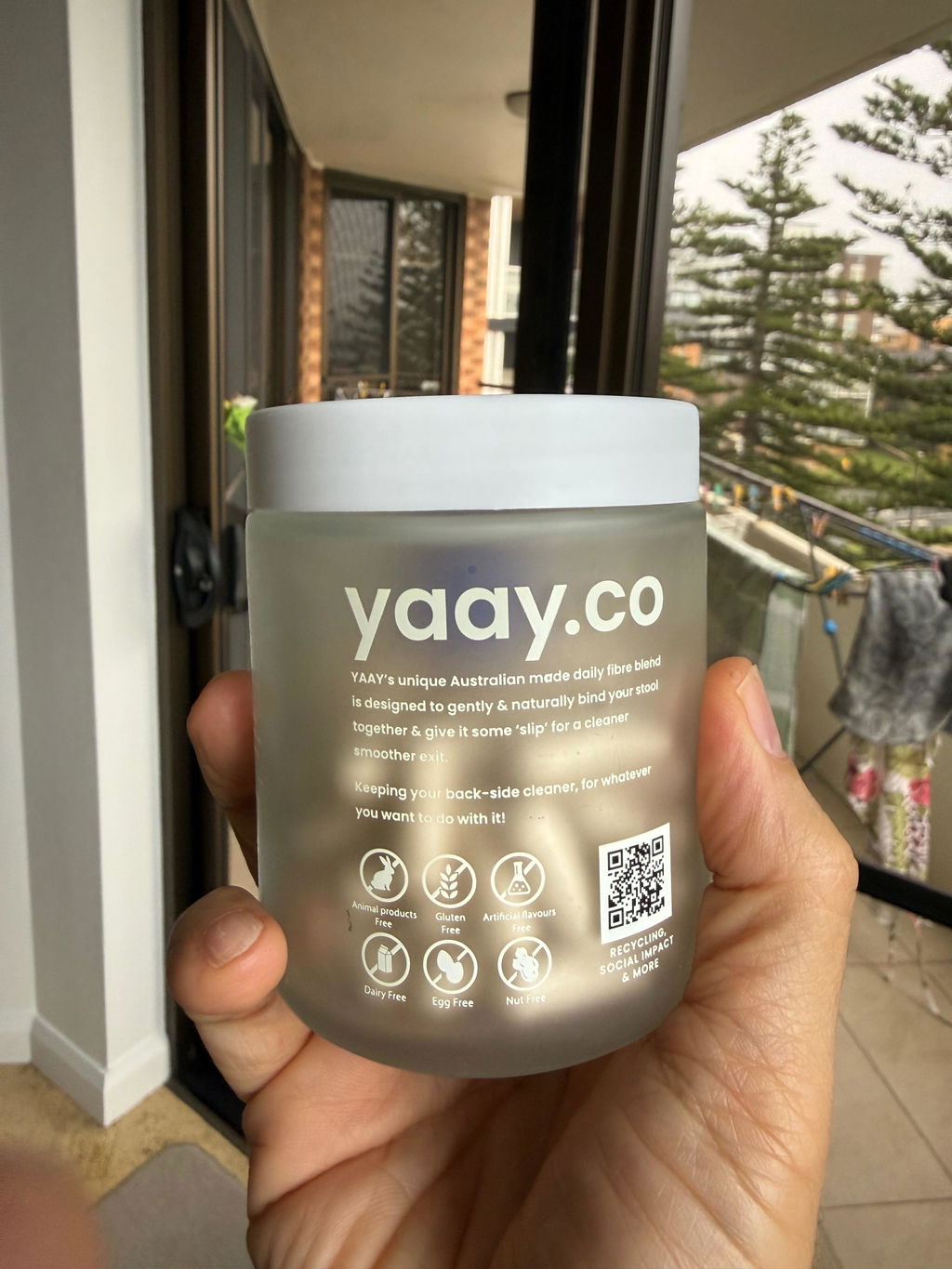
YAAY More Than Fibre Capsules pair psyllium husk with aloe vera for a gentler formulation that's easier on the stomach.
The Real Differences: Fibre Capsules vs Powder
Both formats contain psyllium husk. Both support regularity, digestive comfort, and gut health. The differences come down to everyday experience.
Taste and texture
This is where the conversation starts and often ends. Psyllium husk powder has a distinctive gritty, 'gloopy' texture that thickens rapidly in liquid. Some people are fine with it. Many aren't. The number of people searching for "tasteless fibre powder" tells you which camp is bigger. Capsules have no taste. You swallow them with water and get on with your day.
Dosage consistency
With powder, you're measuring each dose yourself: a scoop, a teaspoon, an eyeballed amount. It's easy to over- or under-dose, especially when you're rushing. Capsules deliver a consistent, pre-measured amount every time.
Travel and lifestyle
Taking psyllium powder to the office, on a flight, or on a weekend away means packing a big tub of powder, and constantly looking for a glass and spoon. Then mixing it fast before it sets. Capsules go in your bag. Done. (As we're frequently travellers ourselves, we actually created a Premium Travel Tin for our supps as well).
Speed and absorption
Psyllium husk powder starts absorbing water immediately. That's why it gels so quickly in the glass. Some people argue this means it "works faster" than capsules, but the difference is marginal. The capsule shell dissolves in minutes, releasing the psyllium husk into your stomach where it absorbs water in exactly the same way. For daily supplementation, the functional difference in timing is negligible.
Cost
Powder is cheaper per serve because there's no capsule shell or encapsulation process. If cost is the deciding factor and you're fine with the texture, powder wins on price. But the fibre supplement collecting dust in the pantry is the most expensive supplement of all.
When Psyllium Powder Makes Sense
Powder isn't wrong. It works well if you're blending it into smoothies or protein shakes where the texture gets masked, if you're baking with it, or if you need a high therapeutic dose under medical supervision. Some people genuinely like the ritual of mixing their fibre drink each morning, and that's a fine reason to stick with it.
When Fibre Capsules Are the Better Choice
Whether you're in it for gut health, regularity, or staying ready for whatever the night throws at you, capsules are the ones you'll actually take. Not the ones you'll try for a fortnight and then push to the back of the pantry behind other things going off back there.
That's the real difference here: whether this becomes part of your day or part of your cupboard archaeology. YAAY More Than Fibre Capsules pair psyllium husk with aloe vera for a gentler daily experience, in a format that asks nothing of you except remembering to swallow them with water.
What About Fibre Tablets?
You'll also see fibre tablets and fibre pills on the market. These are compressed psyllium husk in a hard tablet form, essentially the same concept as capsules but denser and often harder to swallow. Tablets can also take longer to break down in the stomach compared to capsules, which dissolve more readily. If you can choose between the two, capsules are generally the smoother experience.
Metamucil capsules vs powder
Metamucil is the name most people know, and it comes in both formats. Both are built on psyllium husk, so the difference comes down to how you take them and what comes with the fibre.
- The powder is stirred into 250ml of liquid and drunk straight away, before it thickens. The Smooth Texture range contains aspartame, an artificial sweetener, and the Natural Granular listing says it contains sugar.
- The capsules skip the mixing. At 525mg of psyllium each, the directions suggest up to 6 capsules per dose for regularity, swallowed one at a time. The listing also says they contain sulfites.
If you like the idea of capsules but six at a time sounds like a lot, it’s worth looking at how much psyllium is in each one. Additives and artificial ingredients are also definitely something to check.
Psyllium husk capsules: check the strength
The amount of psyllium in each capsule varies from brand to brand, and that decides how many you end up swallowing. Each YAAY capsule holds 667.8mg of psyllium husk. That’s 27% more than a Metamucil capsule.
| YAAY More Than Fibre Capsules | Metamucil Fibre Capsules | |
|---|---|---|
| Psyllium per capsule | 667.8mg | 525mg |
| What else is in it | Aloe vera and the capsule shell. Nothing else added | Listing says “Contains sulfites” |
| Directions | 3 to 4 capsules a day | 2 to 6 capsules per dose, 1 to 3 times a day |
| Made in | TGA-licensed facility, Melbourne | Not stated on the listings we checked |
Metamucil details from Australian retailer listings, checked 12 October 2026.
Most people take 3 or 4 YAAY capsules a day with a glass of water, all at once or split across the day. There’s no gritty glass, no aftertaste and nothing added. If you’re weighing up Metamucil against other options more broadly, our guide to natural alternatives to Metamucil covers ingredients and additives in more detail.
The Bottom Line
Psyllium husk powder and fibre capsules contain the same core ingredient and deliver the same gut health benefits. The difference is in the daily experience, and whether that experience makes you more or less likely to keep taking fibre consistently.
If you want a no-fuss, no-taste daily fibre supplement that travels well, doses consistently, and is overall a more convenient, more enjoyable experience, capsules are the clear choice. YAAY More Than Fibre Capsules combine psyllium husk with aloe vera in a format designed for people who want the benefits of fibre without any of the faff. Check out our FAQ if you've got questions about dosage or getting started.
Love ya guts.
Frequently Asked Questions
Do fibre capsules work as well as powder?
Yes, when they contain the same fibre and you take a comparable amount. Psyllium husk capsules are psyllium husk powder in a shell. The main differences are taste, convenience and how many capsules you need to match a scoop of powder. For many people, taste alone is the reason they switch to YAAY More Than Fibre Capsules, because they are over mixing up gritty powders.
Are Metamucil capsules as good as the powder?
Both are psyllium husk, so the fibre itself is the same. The differences are in how you take them and what comes with it. The capsule listing says it contains sulfites, the Smooth Texture powders contain aspartame and the Natural Granular contains sugar. If you’d prefer capsules with more psyllium in each one and nothing added, YAAY has 667.8mg per capsule, with just aloe vera and the capsule shell alongside it.
Are psyllium husk tablets as good as powder?
Tablets are compressed psyllium husk, so the fibre is the same. They tend to be denser and harder to swallow than capsules. Check how much psyllium is in each tablet to work out how many match your usual dose.
How many YAAY capsules do I take?
Most people take 3 or 4 a day with a glass of water. Each capsule has 667.8mg of psyllium husk, 27% more than a Metamucil capsule, so there are fewer to swallow.
What's in YAAY capsules?
Three things: psyllium husk (667.8mg per capsule), aloe vera and the capsule shell. There's no sugar, sweeteners, flavours, colours, preservatives or fillers, and it's vegan and gluten-free. If a clean, easy to take supplement is important to you, YAAY's More Than Fibre Capsules might be your answer.