Fibre Supplement Comparison: Which Type Actually Does What You Need
Share
Every fibre supplement on the shelf makes broadly the same promise. Better digestion, less bloating, more regularity. Flip the tub over, though, and you'll find they're built on completely different ingredients that behave in completely different ways once they're inside you.
That's the part nobody explains. "Fibre" isn't one thing. It's a category covering ingredients that do genuinely different jobs, and picking the wrong one for your goal is the most common reason people decide fibre supplements "don't work for them."
So here's an honest comparison of what's actually in the products you're choosing between.
The five fibre types you'll actually encounter
1. Psyllium husk
The one with the deepest research behind it. Psyllium is a soluble, gel-forming fibre: it absorbs water, thickens into a gel, and binds to waste as it passes through. That's what produces bulkier, better-formed, more complete bowel movements.
Of all the fibre types, psyllium has the strongest evidence base for regularity. If your goal is cleaner and more complete rather than just "more fibre in the diet," this is the category to be shopping in.
Worth saying clearly, though: choosing psyllium narrows your options, it doesn't finish the job. Many psyllium-based fibre supplements can still be full of fillers like maltodextrin, citric acid, artificial sweeteners (such as aspartame or sucralose), natural or artificial flavours, and colors to improve taste, mixability, and shelf life.
Same headline ingredient, very different product. The dose, the additions and the format are where those products actually separate, which is what the rest of this guide covers.
Best for: regularity, complete bowel movements, less wiping.
Trade-off: it needs water to work, and can be unpleasant taken as a powder.
2. Wheat dextrin
The ingredient behind Benefiber. It's soluble, dissolves clear, and stirs into food or drink without changing much about either. Genuinely convenient.
The catch is that it doesn't gel or bulk the way psyllium does. It's a reasonable way to lift your daily fibre number, but it's a weaker tool if what you want is a change in what's actually happening in the bathroom.
Best for: adding fibre invisibly to food and drink.
Trade-off: much lighter on the bulking and binding side and generally lower fibre content overall.
3. Inulin and prebiotic fibres
Inulin, chicory root, partially hydrolysed guar gum. These are prebiotics, meaning their main job is feeding the bacteria already living in your gut rather than moving anything through it.
Great in principle. In practice, prebiotic fibres are the ones most likely to cause gas and bloating if your system isn't used to them, which is an unfortunate outcome for anyone who bought a fibre supplement specifically to feel less bloated.
Best for: microbiome support, if you introduce it slowly.
Trade-off: the highest bloating risk of the group.
4. Sterculia
A bulk-forming fibre found in products like Normacol. It swells with water similarly to psyllium and is often recommended in a clinical context.
Perfectly effective. It's just less researched than psyllium, and typically comes in granule format that has to be swallowed without chewing, which suits some people and not others.
Best for: bulk-forming, when psyllium doesn't agree with you.
Trade-off: narrower evidence base, granule format.
5. Methylcellulose
A synthetic, non-fermentable fibre. Because your gut bacteria don't ferment it, it produces less gas than most alternatives, which makes it a common recommendation for people with sensitive systems.
Best for: low gas production, sensitive guts.
Trade-off: synthetic rather than plant-derived, if that matters to you.
Quick Fibre Comparison
|
Fibre type |
Gels and bulks? |
Bloating risk |
Best suited to |
|
Psyllium husk |
Yes, strongly |
Low to moderate |
Regularity and completeness |
|
Wheat dextrin |
Minimal |
Low |
Discreetly topping up daily fibre |
|
Inulin / prebiotics |
No |
Higher |
Microbiome support |
|
Sterculia |
Yes |
Low to moderate |
Bulk-forming alternative |
|
Methylcellulose |
Yes |
Lowest |
Sensitive or gas-prone guts |
The three things a comparison table can't tell you
Dose is where most products quietly fall short
The National Health and Medical Research Council sets the Adequate Intake for dietary fibre at 25g a day for women and 30g for men. Most Australian adults don't get close — analysis of the national nutrition survey data found only around 28% of adults hit that mark. A supplement is meant to help close that gap.
The number that matters isn't what's printed on the front of the pack, it's what a full daily serving actually delivers. Compare products on that basis, and factor in how many capsules or scoops that serving requires. A cheaper product that needs twice the daily dose usually isn't cheaper.
What else is in there
Once you've settled on a fibre type, look at what's riding alongside it. Some products carry sweeteners, artificial colours and bulking agents that don't contribute anything to the outcome and can irritate a sensitive gut.
The additions worth paying for are the ones doing an actual job. Aloe vera alongside psyllium is a good example: it adds slip and soothing support, which makes the gel-forming action easier on your system rather than just louder.
You can read more about the benefits of aloe vera in a fibre supplement here.
Where and how it's made
In Australia, manufacturing under TGA oversight means the product has been made to a defined quality standard. It's not a promise that it'll work for you, but it does tell you something about the operation behind it, and it's an easy filter to apply when two products otherwise look identical.
The format question
Once you've picked your fibre type, there's still the choice between capsules and powder, and it's a bigger deal than it looks. Fibre only works if you take it consistently, so the honest question isn't which format is theoretically superior, it's which one you'll still be using in three months.
We've unpacked that properly in Fibre Capsules vs Powder, including the water requirement, the texture issue, and why the convenience gap matters more than most people expect.
Where YAAY sits
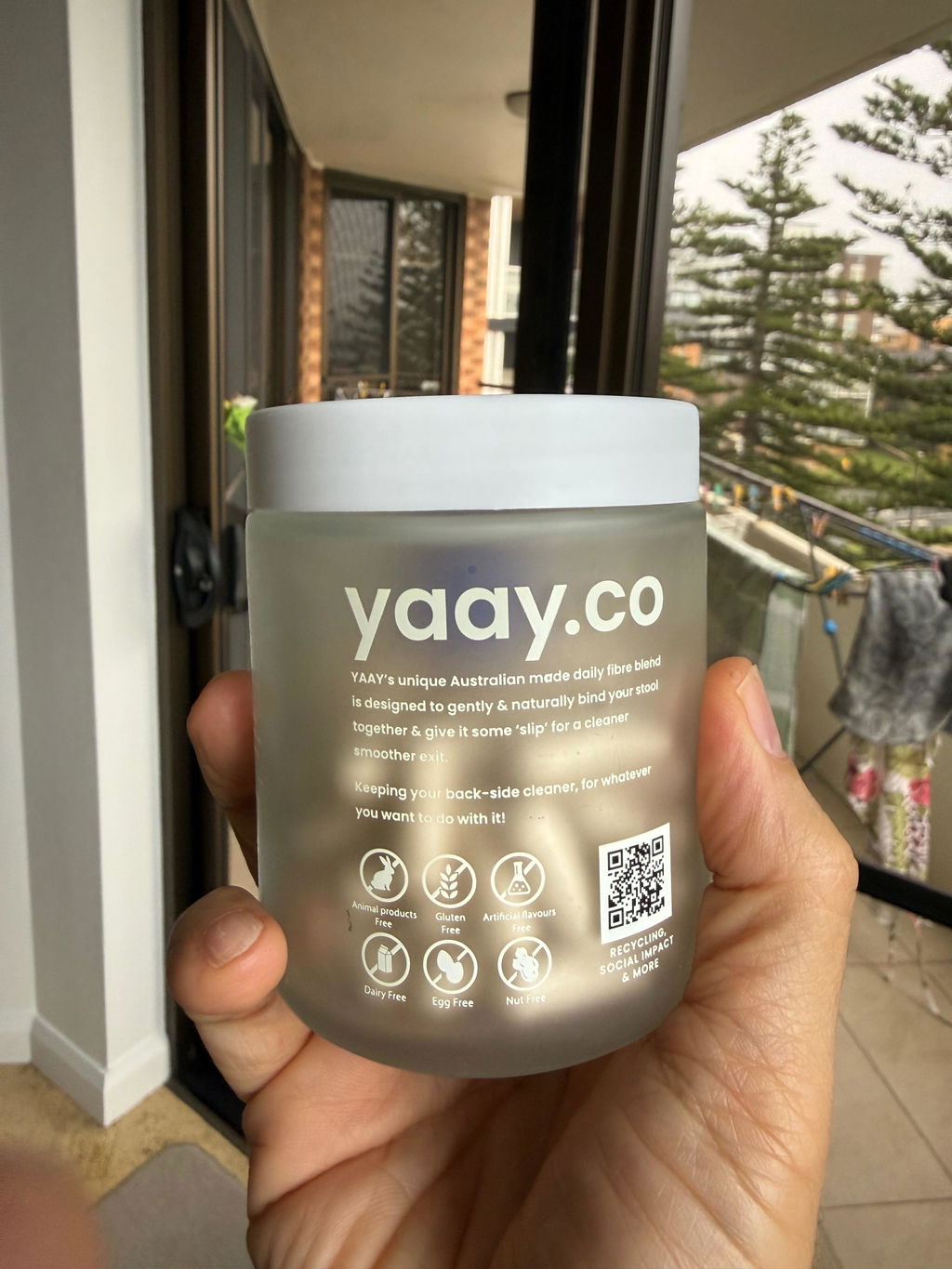
YAAY More Than Fibre Capsules are psyllium husk and aloe vera. Psyllium because it's the fibre with the evidence behind it for the outcome most people are actually chasing, aloe vera because it makes that easier on your gut.
We're also one of the only fibre supplements on the market that does not stuff their product with inactive ingredients or fillers like maltodextrin, citric acid, silicon dioxide or magnesium stearate, just to name a few nasties. And you'll never find artificial flavours, sweeteners or colours in our products.
Frequently Asked Questions
Which fibre supplement is best overall?
There isn't a universal answer, but psyllium husk has the strongest evidence base for regularity and completeness, which is the benefit that most people are actually after. Match the fibre type to your goal first, then compare products within that category.
Is soluble or insoluble fibre better?
They do different jobs. Soluble fibre gels and slows digestion, insoluble adds bulk and speeds transit. Most people benefit from both, and a good diet plus a soluble supplement like psyllium is a sensible combination.
Can I take more than one fibre supplement?
You can, but there's rarely a reason to. Increasing the dose of one well-chosen product is usually more effective than stacking, and easier on your gut. Increase gradually either way, and drink more water than you think you need.
How long until a fibre supplement works?
Two to four weeks of consistent daily use is a fair expectation. Fibre changes your baseline rather than producing an immediate event.
Before you buy
If you want the full checklist, including the red flags worth walking away from, that's all in our main guide: The Best Fibre Supplement in Australia: What to Look For.
This is general information, not medical advice. Psyllium can affect absorption of some medications, so check with your healthcare professional if you take anything regularly.