What Does a Healthy Poo Look Like? (And How Often Should You Go?)
Share
Everyone poos, and almost everyone has wondered at some point whether theirs is normal. It's not a dinner party topic, but it's one of the easiest ways to keep an eye on how your gut is going.
So let's talk about it properly: how often you should go, what a healthy poo looks like, and what's worth getting checked.
How often should you poo?
There's no single magic number. According to healthdirect, anywhere from three times a day to three times a week is normal.
What matters more is what's normal for you. If you usually go once a day and suddenly you're going every three days, or five times a day, that change is worth paying attention to.
A healthy poo should also be fairly quick. Healthdirect puts it at around one to two minutes. If you're regularly sitting there scrolling and straining, that's a sign things could be moving more easily.
What should a healthy poo look like?
Doctors use something called the Bristol Stool Chart to describe poo. It sorts stools into seven types:
- Types 1 and 2: hard, lumpy and difficult to pass. This usually points to constipation.
- Types 3 and 4: sausage-shaped, smooth or with a few cracks, and easy to pass. This is the goal.
- Types 5 to 7: soft blobs through to completely liquid. This leans towards diarrhoea.
A type 3 or 4 is what healthdirect describes as healthy. It holds together, it doesn't need pushing, and it usually doesn't leave much behind. If you've ever wondered why some poos take so much wiping, the shape and texture are a big part of it.
What colour should poo be?
Brown, in any shade from light to dark. That colour comes from bile. Some foods change it temporarily (beetroot is the classic surprise), and that's nothing to worry about.
Black, very pale or light grey poo is different. Healthdirect recommends seeing your doctor if you notice those colours.
When to see your GP
Most changes come and go with what you eat, how much water you drink and how busy life is. But don't wait it out if you notice:
- blood in your poo or on the toilet paper
- poo that's black, pale or light grey
- diarrhoea or constipation that isn't getting better
- a change in your usual pattern that sticks around
Large amounts of blood, or black stools, mean seeing a doctor straight away.
How to get your poo into the healthy zone
For most people, it comes back to a few everyday habits:
- Eat enough fibre. Australian guidelines suggest around 25g a day for women and 30g for men. Wholegrains, fruit, vegetables, legumes, nuts and seeds all count.
- Drink enough water. Fibre needs water to do its job.
- Keep moving. Regular activity helps keep things moving inside too.
- Don't hold it in. When you need to go, go.
Soluble fibre is especially helpful. According to the Better Health Channel, it soaks up water and helps stools pass more easily. That's what helps turn a type 1 or 2 into a 3 or 4.
Where YAAY fits
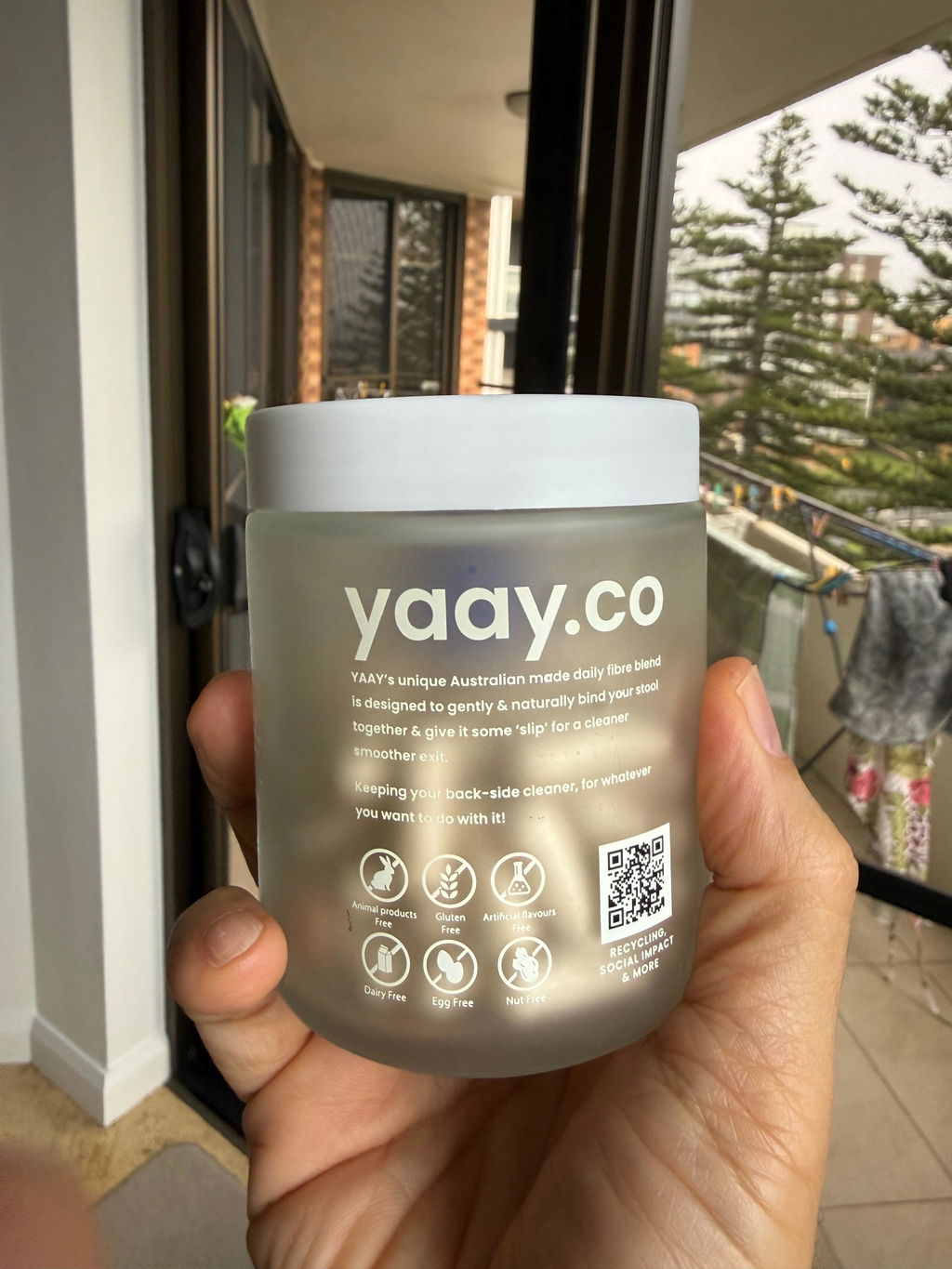
On days your diet doesn't cover it, a fibre supplement fills the gap. YAAY is built on psyllium husk, one of the most concentrated sources of soluble fibre you can get, with 667.8mg in every capsule. We add aloe vera for slip and moisture, and nothing else: no sugar, sweeteners, flavours, colours, preservatives or fillers.
Most people take 3 or 4 capsules a day with a big glass of water. No powder to mix, no gritty texture. And if you're taking fibre for prep, our Fibre for Bottoming guide explains how it fits into a routine.
Frequently Asked Questions
How many times a day should you poo?
Anywhere from three times a day to three times a week is considered normal. What's normal for you matters more than hitting a specific number.
What does a healthy poo look like?
A healthy poo is usually type 3 or 4 on the Bristol Stool Chart: sausage-shaped, smooth or slightly cracked, brown, and easy to pass in a minute or two.
Is it bad if I don't poo every day?
Not necessarily. Going every second or third day can be normal for some people. A sudden change from your usual pattern, or poo that's hard and difficult to pass, is more worth paying attention to.
What does it mean if my poo is hard and lumpy?
Hard, lumpy poo (types 1 and 2 on the Bristol Stool Chart) usually points to constipation. More fibre and more water often help. If it doesn't improve, see your GP.
Can a fibre supplement help me poo more regularly?
Soluble fibre like psyllium husk absorbs water and helps stools pass more easily, which is why it's widely used for regularity. Take it with plenty of water and build up gradually.
Try YAAY
If you'd like more type 4 days, start with your fibre. Try YAAY More Than Fibre Capsules: psyllium husk and aloe vera, and nothing else added. Your first order is covered by our 30-day money-back guarantee.